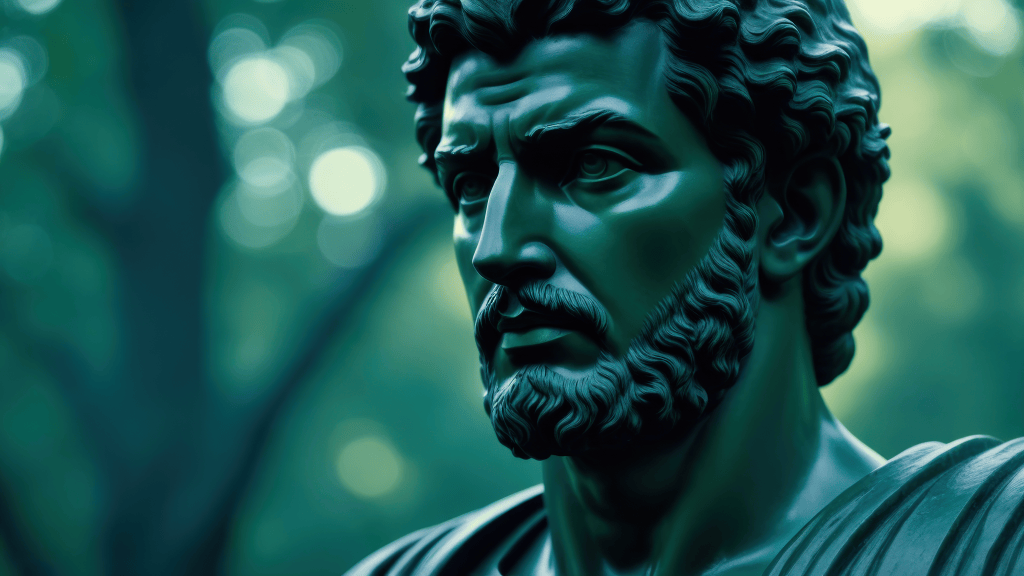
Learning to let go of what we cannot control, and take responsibility for what we can.
The idea comes from Epictetus, a Greek Stoic philosopher who taught that one of the keys to living a calmer and more effective life is understanding what is actually within our control.
His central principle is simple:
Some things are within our control, and some things are not.
The key is to focus on what is and what is not under our control.
What is under our control?
These are the things we have the power to choose and decide:
– Our decisions
– Our effort
– Our attitude
– Our reactions
– Our values
– Whether we prepare
– How we treat other people
– Whether we keep trying
What is not under our control?
These are things that depend on circumstances, other people, or events beyond our influence:
– Other people’s opinions
– Other people’s actions
– The past
– Unexpected events
– Our reputation
– The outcome of every situation
– Whether someone likes us
– What people say about us
The basic principle of Stoicism is to focus our energy only on what we can control.
Our emotions, thoughts, and actions are often influenced by what happens around us every day. Our memories make up our past, and our past has led us to where we are now—the present. Yet, we often allow uncontrollable factors or events, such as other people’s actions, their opinions, or an unexpected outcome, to affect who we are and how we feel.
It is true that we are shaped by what we have been through. Everything that has happened to us has, in some way, helped build the person we are today.
But this principle is not about becoming indifferent or detached from life. It is about refusing to let our peace depend entirely on factors that we cannot control.
Instead, we can focus on what is possible and what is within our reach. We can focus on what can be done instead of dwelling on what cannot.
You cannot change what has already happened, but you can change the way you see it and how you respond to it.
A man stuck in a sand pit does not spend all his time focusing on the pit. He looks outside and tries to find a way to get out of it.
Do not focus only on the problem. Focus on what can be done about it.
Your decision to make an effort to improve things, to hold on to your values, to not let a difficult past dictate your attitude or the way you treat people, to be prepared for whatever comes next, and to never lose hope—these are the things that matter.
The goal is not to stop caring about everything. It is to learn to care about the right things.
Epictetus was not promising that life would become easy. He was suggesting that we often suffer unnecessarily when we demand control over things that were never ours to control.
We cannot decide what happens to us, what others think, or how every story ends. But we can decide how we respond, what we give our energy to, and who we choose to become through it all.
Life becomes a little lighter when we stop trying to control the uncontrollable and start taking responsibility for what is truly ours.
Image by Ronaldo Mineirinho from Pixabay




 The Disenchanted Project
Leave a comment