
For more than six decades, a little boy in Philadelphia was known only by a haunting nickname: “The Boy in the Box.”
His real name was unknown. His family was unknown. His story seemed destined to remain one of America’s most painful unsolved mysteries.
Then, in 2022, after 65 years of investigation and advances in DNA technology, investigators finally gave him something he had been without for most of his life after death: a name.
His name was Joseph Augustus Zarelli.
But identifying him solved only part of the mystery.
The Discovery
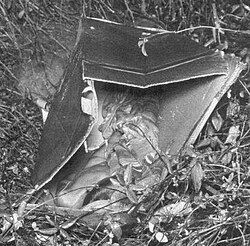
On February 25, 1957, a young boy was discovered in the Fox Chase area of Philadelphia, Pennsylvania. He had been left inside a cardboard bassinet box near Susquehanna Road.
Investigators determined that the child was approximately four years old. He had died from blunt-force trauma, and authorities immediately began trying to determine who he was and what had happened to him.
There was one enormous problem: nobody came forward to claim him.
Police distributed thousands of posters and pursued numerous leads, hoping someone would recognize the child. Yet despite the enormous effort, his identity remained unknown.
He eventually became known as “America’s Unknown Child.”
A Mystery Without a Name
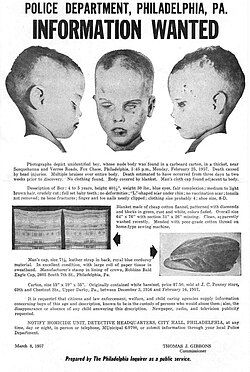
For decades, investigators tried to reconstruct the boy’s identity using the limited evidence available to them.
The investigation took place in an era when forensic DNA testing did not exist. Detectives had to rely on traditional investigative methods, physical evidence, photographs, witness information and public appeals.
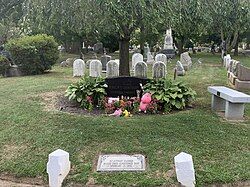
The boy was eventually buried at Ivy Hill Cemetery in Philadelphia. His grave carried the identity that the public had given him: “America’s Unknown Child.”
As the years passed, investigators changed, technology developed, and generations grew up without ever learning who the child really was.
Yet the case never completely disappeared.
Decades of Questions
One of the most disturbing aspects of the case was the simple question:
Who was this child?
Investigators eventually determined that he had lived in the area of 61st Street and Market Street in West Philadelphia. Police also determined that he had biological siblings.
Yet, according to investigators, Joseph had never been reported missing.
That raised another question that would remain unanswered for decades:
How could a four-year-old child disappear without anyone reporting him missing?
The investigation continued through the work of detectives, forensic specialists and organizations dedicated to solving unidentified-person cases.
Some investigators spent years of their careers trying to give the boy his identity.
The Breakthrough: DNA
The biggest breakthrough came from a technology that did not exist when the boy was found.
Investigators eventually obtained DNA from Joseph’s remains. Because more than six decades had passed, the genetic material was highly degraded, making the process extremely difficult.
Modern forensic genetic genealogy provided a new path.
Instead of simply asking, “Whose DNA is this?”, investigators could look for genetic relationships and use those connections to construct a family tree.
The process involved comparing genetic information with relatives and using genealogical research to work backward toward the child’s identity.
Investigators eventually discovered genetic connections that pointed toward the Zarelli family.
The evidence led them to Joseph Augustus Zarelli, born on January 13, 1953.
He was only four years old when he died.
After 65 Years, He Had a Name
On December 8, 2022, Philadelphia authorities announced what investigators had spent decades trying to discover:
The Boy in the Box was Joseph Augustus Zarelli.
The announcement transformed the case.
For 65 years, newspapers, investigators and the public had referred to him by a description rather than a name. Now, the child buried as “America’s Unknown Child” had been identified.
His identification also revealed that he had surviving relatives.
A new headstone bearing his name was later dedicated at Ivy Hill Cemetery, replacing the anonymity that had surrounded his grave for decades.
But the Mystery Wasn’t Over
It would be easy to think that identifying Joseph solved the entire case.
It didn’t.
The biggest question remains: Who was responsible for his death?
Philadelphia police have continued to treat the case as a homicide. Investigators have said they have information and suspicions concerning who may have been responsible, but the identity of a perpetrator has not been publicly established.
That means the Boy in the Box mystery has changed.
For 65 years, the central question was:
Who was the boy?
Now we know.
He was Joseph Augustus Zarelli.
The question that remains is:
What happened to Joseph, and who was responsible?
More Than a Cold Case
The story of Joseph Augustus Zarelli is not simply a mystery about an unidentified child.
It is also a reminder of how much forensic science has changed.
In 1957, investigators could not use the sophisticated DNA techniques available today. More than six decades later, genetic genealogy gave investigators a path toward solving a mystery that had resisted generations of detectives.
His identification demonstrated how old evidence can sometimes become useful again when new technology becomes available.
But perhaps the most important part of the story is simpler.
For decades, the world knew him as “The Boy in the Box.”
Now, he has a name.
Joseph Augustus Zarelli.
And although many questions about his short life and death remain unanswered, the discovery of his identity ensured that he would no longer be remembered merely as an unidentified victim.
He was a child with a name, a family, and a life that mattered.
And the mystery surrounding his death continues.
A Note on the Case
This article discusses a real historical homicide involving a child. The purpose is to document the investigation and the eventual identification of Joseph Augustus Zarelli respectfully, without sensationalizing the circumstances of his death.
Image credit: Philadelphia Police Department, 1957 — via Wikimedia Commons (Public Domain).





 The Disenchanted Project
Leave a comment